- Today
- Holidays
- Birthdays
- Reminders
- Cities
- Atlanta
- Austin
- Baltimore
- Berwyn
- Beverly Hills
- Birmingham
- Boston
- Brooklyn
- Buffalo
- Charlotte
- Chicago
- Cincinnati
- Cleveland
- Columbus
- Dallas
- Denver
- Detroit
- Fort Worth
- Houston
- Indianapolis
- Knoxville
- Las Vegas
- Los Angeles
- Louisville
- Madison
- Memphis
- Miami
- Milwaukee
- Minneapolis
- Nashville
- New Orleans
- New York
- Omaha
- Orlando
- Philadelphia
- Phoenix
- Pittsburgh
- Portland
- Raleigh
- Richmond
- Rutherford
- Sacramento
- Salt Lake City
- San Antonio
- San Diego
- San Francisco
- San Jose
- Seattle
- Tampa
- Tucson
- Washington
Reason for Stephen Miller's Cringe College Nickname Revealed
The White House deputy chief of staff spent his university career working to cultivate his combative media persona.
Apr. 7, 2026 at 3:38pm
Got story updates? Submit your updates here. ›
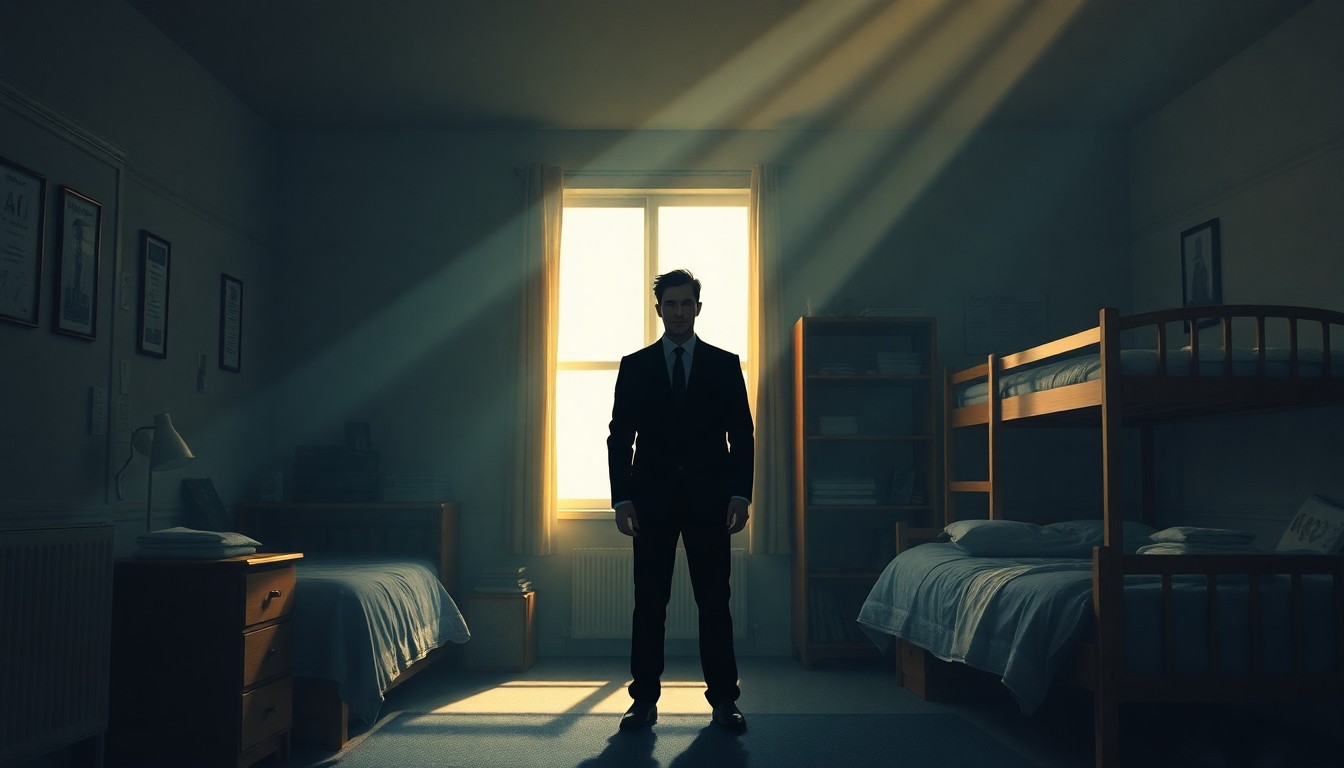 A college-era portrait of Stephen Miller, whose combative persona and controversial views were already evident during his time at Duke University.Santa Monica Today
Stephen Miller, the White House deputy chief of staff and architect of some of President Donald Trump's hardline policies, earned an awkward college nickname during his time at Duke University from 2003 to 2007. According to a new report in the Duke Chronicle, Miller introduced himself at freshman orientation by saying, 'Hi, I'm Stephen Miller. I'm from Santa Monica, California, and I like guns,' which quickly earned him the nickname 'Guns.' Former classmates described Miller as odd and combative, more focused on building his personal brand than socializing, and said he would carry around a metal sword and wear a 'weird, brown bathrobe' while drinking scotch and smoking cigarettes.
Why it matters
This story provides insight into the origins of Stephen Miller's combative public persona, which has been a defining feature of his work in the Trump administration. It highlights how Miller cultivated this persona even during his college years, which has contributed to his reputation as a controversial and divisive figure in politics.
The details
At Duke, Miller struck his classmates as odd and combative, focused more on building his personal brand than socializing. At freshman orientation, he introduced himself by saying, 'Hi, I'm Stephen Miller. I'm from Santa Monica, California, and I like guns,' which earned him the nickname 'Guns.' Former classmates said Miller would carry around a metal sword and wear a 'weird, brown bathrobe' while drinking scotch and smoking cigarettes. In 2005, Miller began writing a column for the Duke Chronicle called 'Miller Time' in which he apparently delighted in defending seemingly indefensible positions, including rallying behind a radio show host who said that one way to reduce crime was to 'abort Black babies.' Even his fellow conservatives at the Duke Conservative Union were put off by his 'unnecessarily over-the-top, provocative' rhetoric.
- Miller attended Duke University from 2003 to 2007, earning a bachelor's degree in political science.
- In 2005, Miller began writing a column for the Duke Chronicle called 'Miller Time'.
The players
Stephen Miller
The White House deputy chief of staff and architect of some of President Donald Trump's hardline policies.
Amy Terwilleger
A former classmate of Miller's who lived in his freshman dorm at Duke University.
Seyward Darby
Miller's editor at the Duke Chronicle, who said the paper probably shouldn't have published his pieces in retrospect.
Jonathan Ernst
A Reuters photographer who has captured images of Stephen Miller.
What they’re saying
“Hi, I'm Stephen Miller. I'm from Santa Monica, California, and I like guns.”
— Stephen Miller
“He cultivated this personality where he didn't want to be close with anybody. He wanted to have really extreme positions and upset people, provoke people and just really set himself apart.”
— Seyward Darby, Miller's editor at the Duke Chronicle
“In some ways, he was just a normal 18-year-old kid. He just did these things and said these things that were just so odd, so off the wall, that you didn't take it seriously... like typical kids trying to get attention—they say kind of outrageous things.”
— Amy Terwilleger, Miller's former classmate
The takeaway
This story highlights how Stephen Miller's combative public persona and controversial political views were already evident during his college years, as he worked to cultivate a provocative media image and distance himself from his peers. It provides insight into the origins of Miller's hardline approach to policy, which has been a defining feature of his work in the Trump administration.