- Today
- Holidays
- Birthdays
- Reminders
- Cities
- Atlanta
- Austin
- Baltimore
- Berwyn
- Beverly Hills
- Birmingham
- Boston
- Brooklyn
- Buffalo
- Charlotte
- Chicago
- Cincinnati
- Cleveland
- Columbus
- Dallas
- Denver
- Detroit
- Fort Worth
- Houston
- Indianapolis
- Knoxville
- Las Vegas
- Los Angeles
- Louisville
- Madison
- Memphis
- Miami
- Milwaukee
- Minneapolis
- Nashville
- New Orleans
- New York
- Omaha
- Orlando
- Philadelphia
- Phoenix
- Pittsburgh
- Portland
- Raleigh
- Richmond
- Rutherford
- Sacramento
- Salt Lake City
- San Antonio
- San Diego
- San Francisco
- San Jose
- Seattle
- Tampa
- Tucson
- Washington
Physical Intelligence Unveils Groundbreaking Robot Brain with Generalization Capabilities
The startup's new AI model can perform unfamiliar tasks by combining learned skills, challenging traditional robotics approaches.
Apr. 16, 2026 at 8:26pm by Ben Kaplan
Got story updates? Submit your updates here. ›
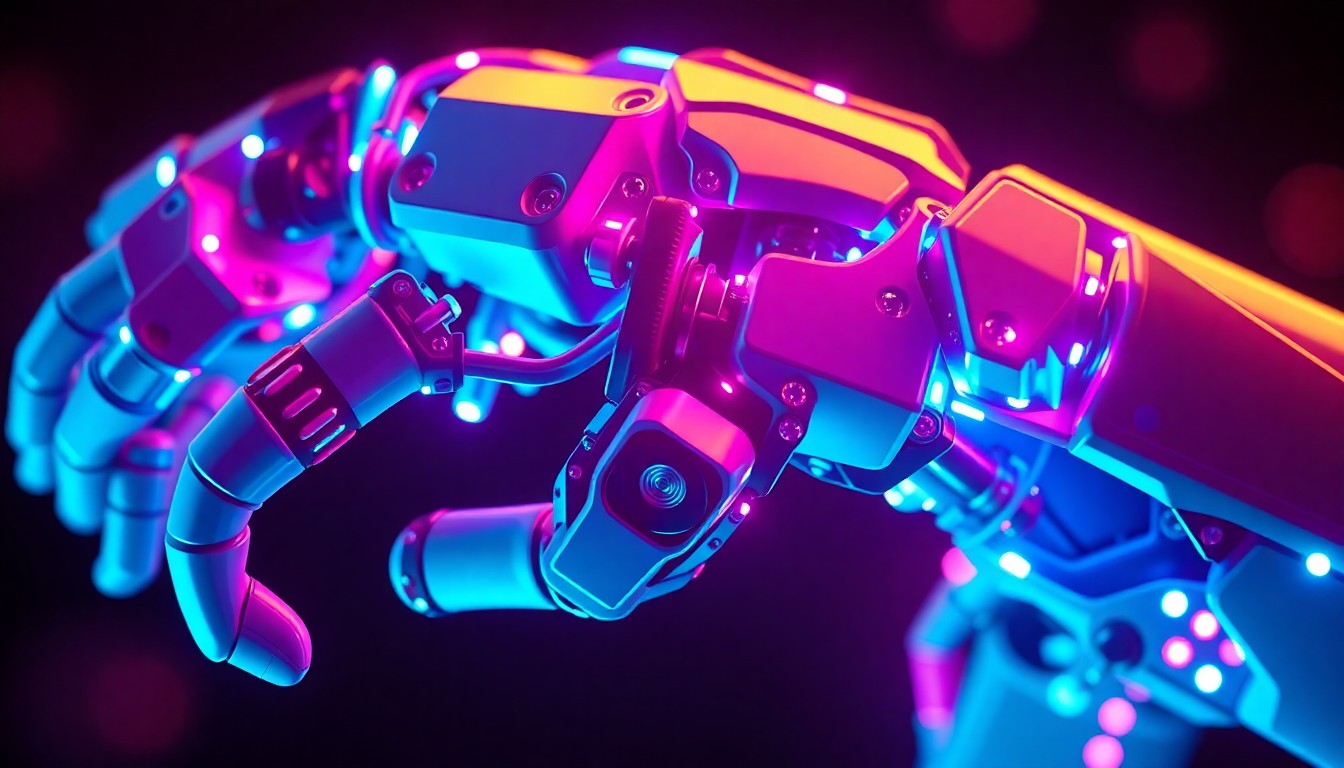 Physical Intelligence's breakthrough robot brain could enable a new era of versatile, adaptable automation.San Francisco Today
Physical Intelligence, a San Francisco-based robotics startup, has published research showcasing its latest AI model, π0.7, which can direct robots to perform tasks they were never explicitly trained on. The model demonstrates a capability called compositional generalization, allowing it to combine skills learned in different contexts to solve new problems. This represents an early but meaningful step toward the long-sought goal of a general-purpose robot brain that can adapt to unfamiliar situations.
Why it matters
If Physical Intelligence's claims hold up, it could signal a significant breakthrough in robotics, moving the field closer to more versatile and adaptable AI systems that can be deployed in real-world environments without extensive retraining. This could have major implications for the future of automation, manufacturing, and human-robot interaction.
The details
The π0.7 model was able to successfully operate an air fryer, a task it had minimal prior exposure to in its training data. With only two relevant examples in the dataset, the model was able to synthesize that information along with broader web-based pretraining data to develop a functional understanding of how the appliance works. The researchers note that the model's ability to generalize in this way was surprising, even to the team that developed it.
- The research was published on April 16, 2026.
The players
Physical Intelligence
A two-year-old robotics startup based in San Francisco that has become one of the most closely watched AI companies in the Bay Area.
Sergey Levine
A co-founder of Physical Intelligence and a UC Berkeley professor focused on AI for robotics.
Ashwin Balakrishna
A research scientist at Physical Intelligence and a Stanford computer science PhD student.
Lachy Groom
A co-founder of Physical Intelligence who previously spent years as one of Silicon Valley's most well-regarded angel investors.
What they’re saying
“Once it crosses that threshold where it goes from only doing exactly the stuff that you collect the data for to actually remixing things in new ways, the capabilities are going up more than linearly with the amount of data. That much more favorable scaling property is something we've seen in other domains, like language and vision.”
— Sergey Levine, Co-founder, Physical Intelligence
“It's very hard to track down where the knowledge is coming from, or where it will succeed or fail.”
— Ashwin Balakrishna, Research Scientist, Physical Intelligence
“My experience has always been that when I deeply know what's in the data, I can kind of just guess what the model will be able to do. I'm rarely surprised. But the last few months have been the first time where I'm genuinely surprised.”
— Ashwin Balakrishna, Research Scientist, Physical Intelligence
What’s next
Physical Intelligence has not provided a specific timeline for when a commercial product based on the π0.7 model might be available, as the research is still in the early stages. The company is said to be in discussions for a new funding round that would nearly double its valuation to $11 billion, but it declined to comment on those plans.
The takeaway
Physical Intelligence's breakthrough with the π0.7 model represents a significant step forward in the quest for more versatile and adaptable robot AI systems. If the company can continue advancing this technology, it could pave the way for a new generation of robots capable of handling a wide range of tasks in real-world environments without extensive retraining, potentially transforming industries from manufacturing to home automation.