- Today
- Holidays
- Birthdays
- Reminders
- Cities
- Atlanta
- Austin
- Baltimore
- Berwyn
- Beverly Hills
- Birmingham
- Boston
- Brooklyn
- Buffalo
- Charlotte
- Chicago
- Cincinnati
- Cleveland
- Columbus
- Dallas
- Denver
- Detroit
- Fort Worth
- Houston
- Indianapolis
- Knoxville
- Las Vegas
- Los Angeles
- Louisville
- Madison
- Memphis
- Miami
- Milwaukee
- Minneapolis
- Nashville
- New Orleans
- New York
- Omaha
- Orlando
- Philadelphia
- Phoenix
- Pittsburgh
- Portland
- Raleigh
- Richmond
- Rutherford
- Sacramento
- Salt Lake City
- San Antonio
- San Diego
- San Francisco
- San Jose
- Seattle
- Tampa
- Tucson
- Washington
The Biohacking Obsession: When Self-Optimization Becomes a Double-Edged Sword
As heart rate variability (HRV) tracking becomes a status symbol in tech hubs, the line between personal health and workplace productivity is blurring.
Apr. 12, 2026 at 3:54pm by Ben Kaplan
Got story updates? Submit your updates here. ›
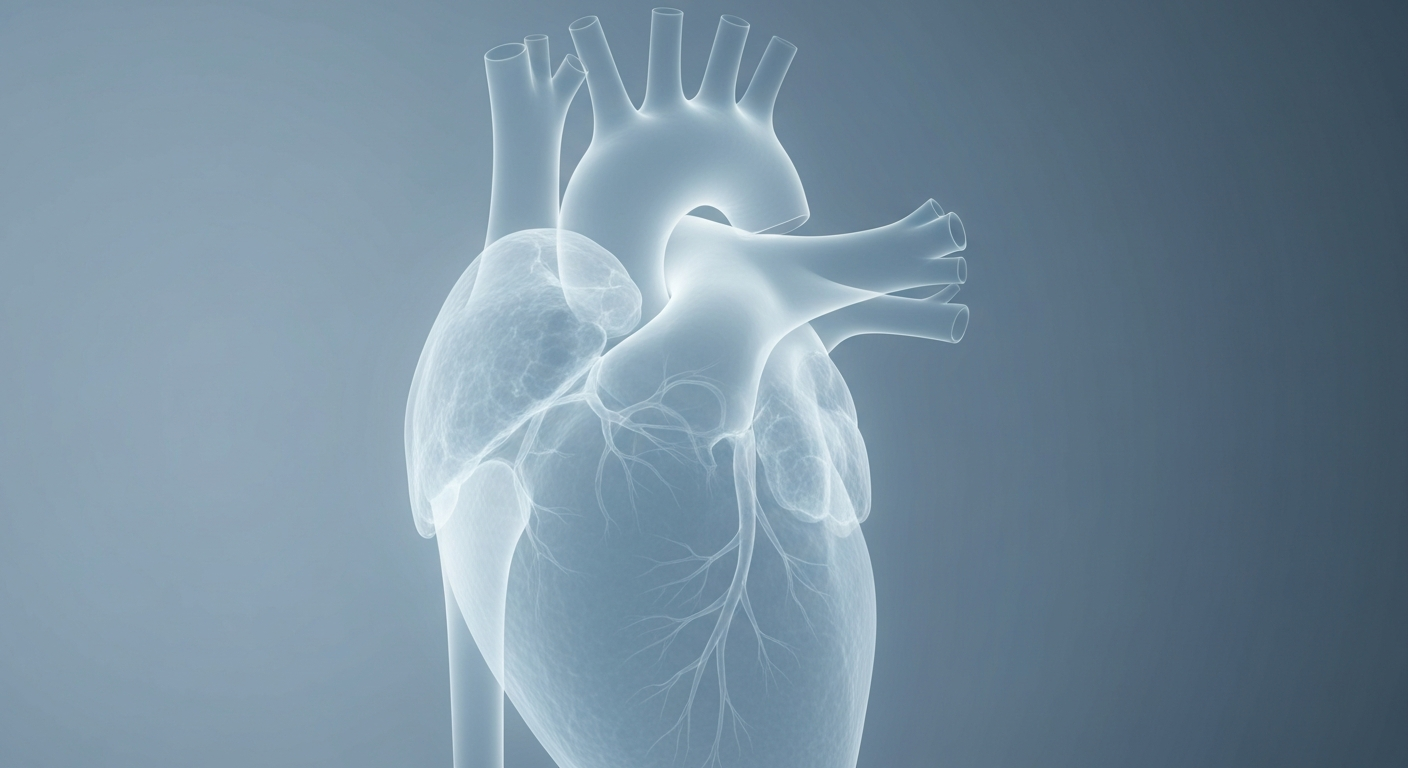 As the biohacking trend blurs the line between personal health and workplace productivity, this ghostly x-ray image of the human heart symbolizes the complex interplay between technology, biology, and the pursuit of self-optimization.San Francisco Today
The article explores the growing trend of biohacking, particularly the use of heart rate variability (HRV) tracking, in the tech industry. It examines how this pursuit of self-optimization has evolved from a personal health metric to a tool for workplace performance, raising questions about the psychological toll and the broader implications for human identity in the face of advancing AI.
Why it matters
The biohacking trend highlights the tension between using technology to improve our health and well-being, and the risk of reducing human beings to a series of data points and metrics. As HRV tracking becomes a status symbol in certain professional circles, it raises concerns about workplace surveillance, the blurring of work-life boundaries, and the potential loss of what makes us uniquely human.
The details
The article profiles several individuals, including Dr. Ravi Solanki, a medical expert turned AI entrepreneur, who have become immersed in the biohacking culture of the San Francisco Bay Area. It also cites the perspectives of experts like Marco Altini, a data scientist, and Bonnie Zucker, a clinical psychologist, who caution against the dangers of obsessive self-monitoring and the risk of turning health into a productivity metric.
- The article was published on April 12, 2026.
The players
Dr. Ravi Solanki
A medical expert turned AI entrepreneur who has become immersed in the biohacking culture of the San Francisco Bay Area.
Marco Altini
A data scientist who points out that high HRV does not necessarily mean someone is healthy, as it is just one piece of the puzzle.
Bonnie Zucker
A clinical psychologist who compares the obsession with self-monitoring to obsessive-compulsive behaviors like handwashing.
Pete Zelles
An individual who found that tracking HRV helped manage his anxiety.
Michelle Cicale
An executive assistant who admitted to limiting her biohacking rituals after seeing friends 'go insane' from overdoing it.
The takeaway
The biohacking trend raises important questions about the balance between leveraging technology for personal health and preserving our humanity in the face of increasing self-optimization and workplace surveillance. As the pursuit of productivity and performance becomes intertwined with biological metrics, it's crucial to consider the psychological and ethical implications of this shift.
San Francisco top stories



San Francisco events
Apr. 13, 2026
Janelle James
Apr. 13, 2026
Janelle James