- Today
- Holidays
- Birthdays
- Reminders
- Cities
- Atlanta
- Austin
- Baltimore
- Berwyn
- Beverly Hills
- Birmingham
- Boston
- Brooklyn
- Buffalo
- Charlotte
- Chicago
- Cincinnati
- Cleveland
- Columbus
- Dallas
- Denver
- Detroit
- Fort Worth
- Houston
- Indianapolis
- Knoxville
- Las Vegas
- Los Angeles
- Louisville
- Madison
- Memphis
- Miami
- Milwaukee
- Minneapolis
- Nashville
- New Orleans
- New York
- Omaha
- Orlando
- Philadelphia
- Phoenix
- Pittsburgh
- Portland
- Raleigh
- Richmond
- Rutherford
- Sacramento
- Salt Lake City
- San Antonio
- San Diego
- San Francisco
- San Jose
- Seattle
- Tampa
- Tucson
- Washington
Breakthrough Microscopy Reveals Cells in Vivid Color
New multicolor electron microscopy technique allows scientists to see cellular structure and molecular locations simultaneously.
Apr. 11, 2026 at 5:36pm by Ben Kaplan
Got story updates? Submit your updates here. ›
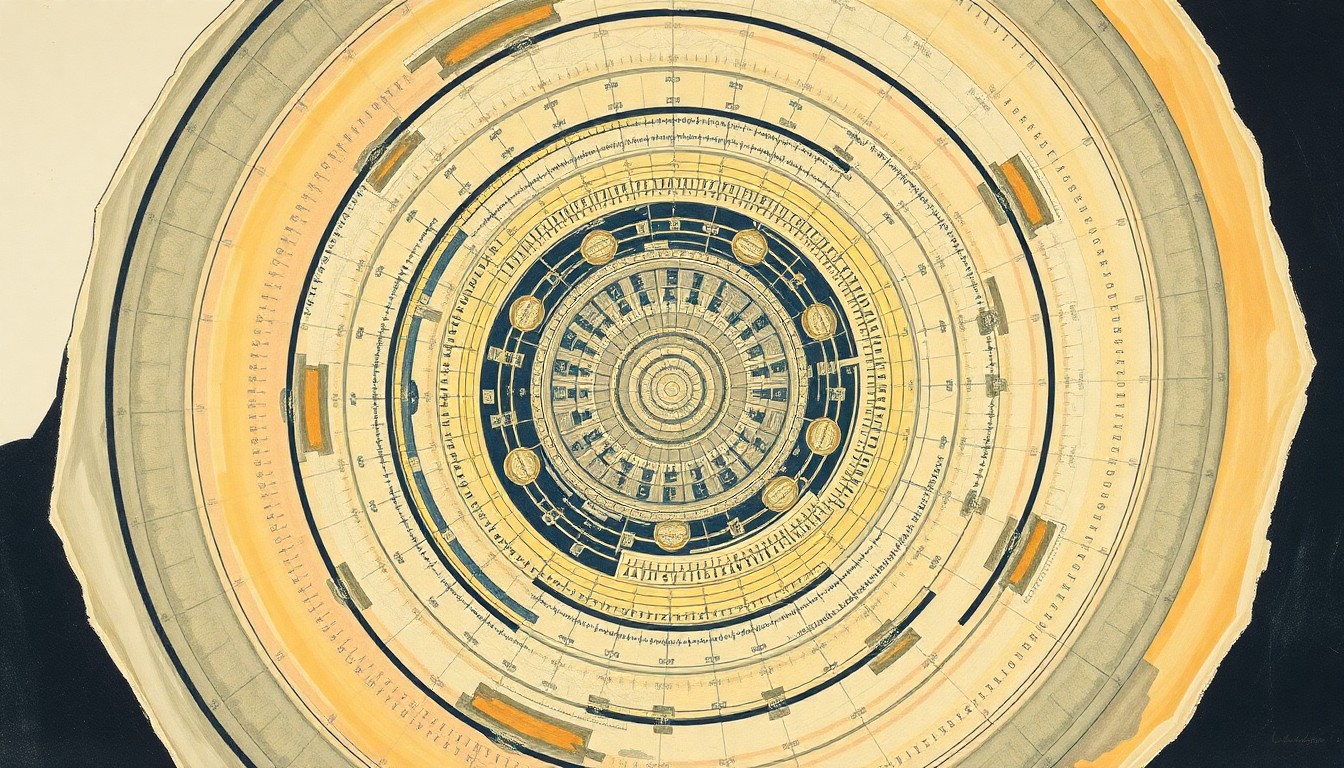 A vivid, multicolor visualization of the intricate molecular landscape within a biological cell, unlocking new insights through a breakthrough in microscopy technology.San Francisco Today
Researchers have developed a revolutionary new imaging technique called multicolor electron microscopy that allows them to observe the intricate architecture of cells with astonishing detail and simultaneously identify the precise locations of proteins, all rendered in vivid color and with nanometer-level resolution. This breakthrough merges the best of two powerful microscopy worlds, overcoming the limitations of previous methods and offering a paradigm shift in how scientists can explore the microscopic universe.
Why it matters
For years, scientists have struggled to achieve both high-resolution structural imaging and precise molecular localization of cells. Traditional fluorescence microscopy lacked the resolution to clearly see individual proteins, while electron microscopy could reveal cellular structures in detail but couldn't color-code specific molecules. This new multicolor approach solves this long-standing challenge, opening up new avenues for studying a vast array of biological processes with an unprecedented level of detail.
The details
The key innovation of this multicolor electron microscopy technique is that it uses a single electron beam to achieve both structural imaging and molecular localization simultaneously. Researchers found that common fluorescent dyes, already widely used in fluorescence microscopy, can emit visible light when excited by electrons in the electron microscope. This allows them to leverage existing tools and knowledge, dramatically accelerating the adoption and application of this new method. The technique has already been successfully demonstrated in mammalian cells and fungus-infected flies, and the researchers are now working to extend it into three-dimensional imaging by integrating it with cryo-electron microscopy.
- The research is set to be presented at the 70th Biophysical Society Annual Meeting in San Francisco, from February 21–25, 2026.
The players
Debsankar Saha Roy
A postdoctoral fellow involved in the research.
What they’re saying
“The resolution is limited to about 250 to 300 nanometers, so you can't see individual proteins clearly. But the bigger issue is that you don't see the structure of the cell. You see whatever is labeled, but you don't see everything else around it.”
— Debsankar Saha Roy, Postdoctoral Fellow
“We're not sending in light—we're sending an electron beam. We have probes that you can attach to a protein that emit visible light when excited by electrons. This process is called cathodoluminescence. So from the same electron beam, you get two sets of information: the colored signal from the probes, and also the detailed structural image from the electrons.”
— Debsankar Saha Roy, Postdoctoral Fellow
“The most surprising thing we observed was that standard dyes used in fluorescence microscopy also emit visible light when you excite them with electrons. That had never been seen before.”
— Debsankar Saha Roy, Postdoctoral Fellow
What’s next
The researchers are eager to push the boundaries further by extending this multicolor electron microscopy approach into three dimensions by integrating it with cryo-electron microscopy.
The takeaway
This breakthrough in multicolor electron microscopy promises to unlock new avenues for studying a vast array of biological processes, from intricate cell signaling pathways to the precise organization of molecular clusters within cells, all while providing an unparalleled view of where these critical events unfold within the cell's architecture.
San Francisco top stories



San Francisco events

Apr. 11, 2026
Caroline Jones with Alyssa Bonagura
Apr. 11, 2026
San Francisco Ballet presents La Sylphide