- Today
- Holidays
- Birthdays
- Reminders
- Cities
- Atlanta
- Austin
- Baltimore
- Berwyn
- Beverly Hills
- Birmingham
- Boston
- Brooklyn
- Buffalo
- Charlotte
- Chicago
- Cincinnati
- Cleveland
- Columbus
- Dallas
- Denver
- Detroit
- Fort Worth
- Houston
- Indianapolis
- Knoxville
- Las Vegas
- Los Angeles
- Louisville
- Madison
- Memphis
- Miami
- Milwaukee
- Minneapolis
- Nashville
- New Orleans
- New York
- Omaha
- Orlando
- Philadelphia
- Phoenix
- Pittsburgh
- Portland
- Raleigh
- Richmond
- Rutherford
- Sacramento
- Salt Lake City
- San Antonio
- San Diego
- San Francisco
- San Jose
- Seattle
- Tampa
- Tucson
- Washington
Supreme Court Revisits Birthright Citizenship, Rooted in 1898 Case
The court seems skeptical of the government's attempt to restrict birthright citizenship, which has been guaranteed since a landmark 19th century ruling.
Apr. 6, 2026 at 6:06pm by Ben Kaplan
Got story updates? Submit your updates here. ›
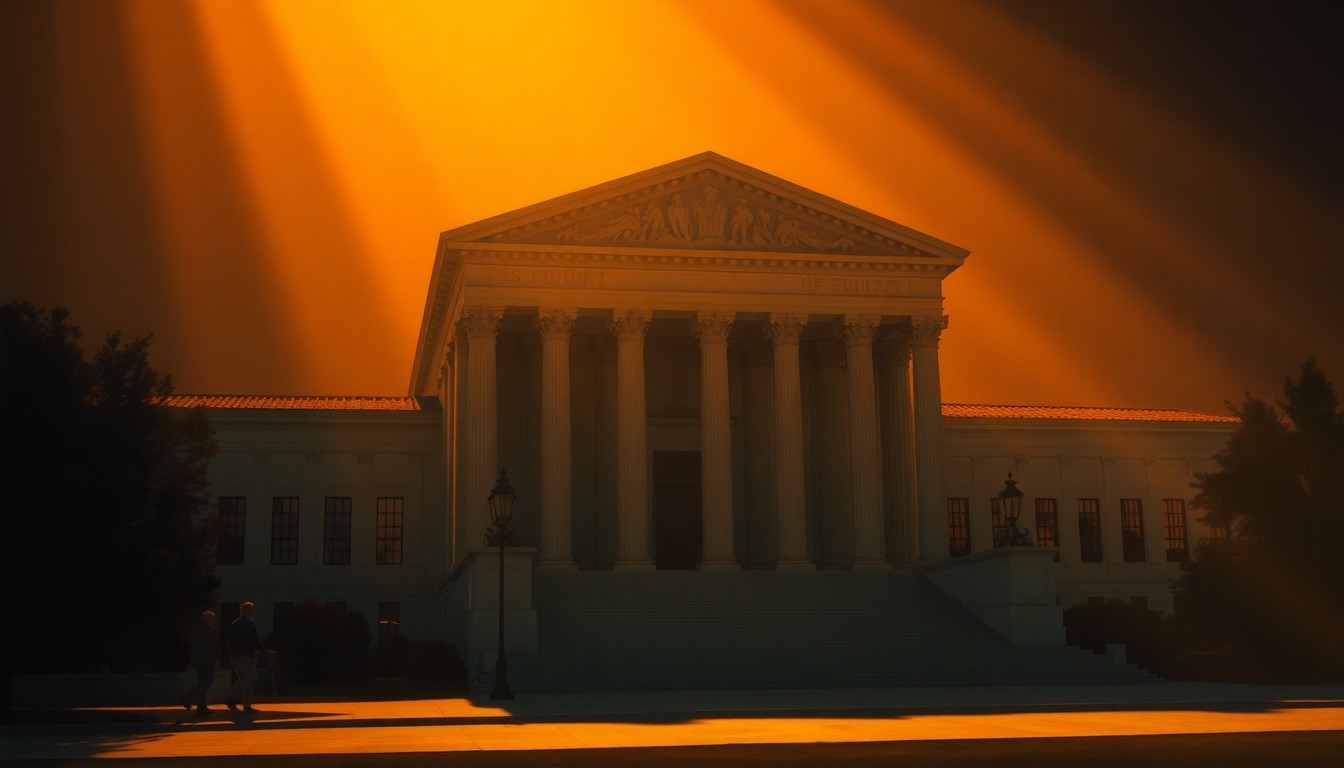 The Supreme Court's consideration of birthright citizenship echoes a landmark 19th century case that affirmed the rights of Chinese-American immigrants.San Francisco Today
The U.S. Supreme Court is hearing arguments on President Trump's executive order seeking to restrict birthright citizenship, the legal principle that grants citizenship to almost anyone born in the U.S. regardless of their parents' status. The court appears skeptical of the government's position, with some justices questioning the relevance of the administration's claims. This issue has a long history, dating back to a landmark 1898 Supreme Court case involving a Chinese-American man named Wong Kim Ark, whose citizenship rights were upheld despite restrictive immigration laws targeting the Chinese at the time.
Why it matters
Birthright citizenship has long been a target of the anti-immigration right, who have sought to limit it. The Supreme Court's skepticism of the government's arguments suggests the justices may be reluctant to overturn this longstanding legal precedent, which has significant implications for immigrant communities and the country's identity as a nation of immigrants.
The details
In 1898, the Supreme Court ruled 6-2 that Wong Kim Ark, a Chinese-American born in San Francisco to Chinese immigrant parents, was a U.S. citizen under the 14th Amendment's Citizenship Clause. This was despite the Chinese Exclusion Act of 1882, which barred Chinese immigration and prevented Chinese nationals from becoming citizens. The court rejected the government's argument that Wong was a 'subject of the Emperor of China' and covered by the Exclusion Act. This landmark ruling established birthright citizenship as a constitutional right, with narrow exceptions.
- In 1894, Wong Kim Ark traveled to China to visit his parents, but was later denied re-entry to the U.S.
- In 1898, the Supreme Court ruled in favor of Wong Kim Ark's citizenship rights.
- In 2022, the Supreme Court heard oral arguments on President Trump's executive order seeking to restrict birthright citizenship.
The players
Wong Kim Ark
A Chinese-American man born in San Francisco in the 1870s, whose citizenship rights were upheld by the Supreme Court in 1898 despite restrictive immigration laws targeting the Chinese.
President Donald Trump
The former U.S. president who issued an executive order seeking to restrict birthright citizenship, a move that is now being challenged before the Supreme Court.
Justice Neil Gorsuch
A Trump appointee to the Supreme Court who seemed skeptical of the government's arguments during the recent oral arguments on birthright citizenship.
Justice Brett Kavanaugh
Another Trump appointee to the Supreme Court who questioned the relevance of the government's claims about birthright citizenship during the recent oral arguments.
What’s next
The Supreme Court is expected to rule on the case regarding birthright citizenship in the coming months, with the potential to significantly impact immigration policy and the rights of immigrant communities in the United States.
The takeaway
The Supreme Court's skepticism of the government's arguments to restrict birthright citizenship suggests the justices may be reluctant to overturn the longstanding legal precedent established in the landmark 1898 Wong Kim Ark case, which has been a cornerstone of the country's identity as a nation of immigrants.
San Francisco top stories



San Francisco events

Apr. 6, 2026
San Francisco Giants vs. Philadelphia Phillies
Apr. 6, 2026
The Strokes
Apr. 6, 2026
Sticky Fingers - Live in North America