- Today
- Holidays
- Birthdays
- Reminders
- Cities
- Atlanta
- Austin
- Baltimore
- Berwyn
- Beverly Hills
- Birmingham
- Boston
- Brooklyn
- Buffalo
- Charlotte
- Chicago
- Cincinnati
- Cleveland
- Columbus
- Dallas
- Denver
- Detroit
- Fort Worth
- Houston
- Indianapolis
- Knoxville
- Las Vegas
- Los Angeles
- Louisville
- Madison
- Memphis
- Miami
- Milwaukee
- Minneapolis
- Nashville
- New Orleans
- New York
- Omaha
- Orlando
- Philadelphia
- Phoenix
- Pittsburgh
- Portland
- Raleigh
- Richmond
- Rutherford
- Sacramento
- Salt Lake City
- San Antonio
- San Diego
- San Francisco
- San Jose
- Seattle
- Tampa
- Tucson
- Washington
Voters Call for Constitutional Amendment to Curb Money's Influence in Politics
Fifty years after Buckley v. Valeo, concerns grow that wealthy donors dominate elections.
Apr. 3, 2026 at 4:05pm
Got story updates? Submit your updates here. ›
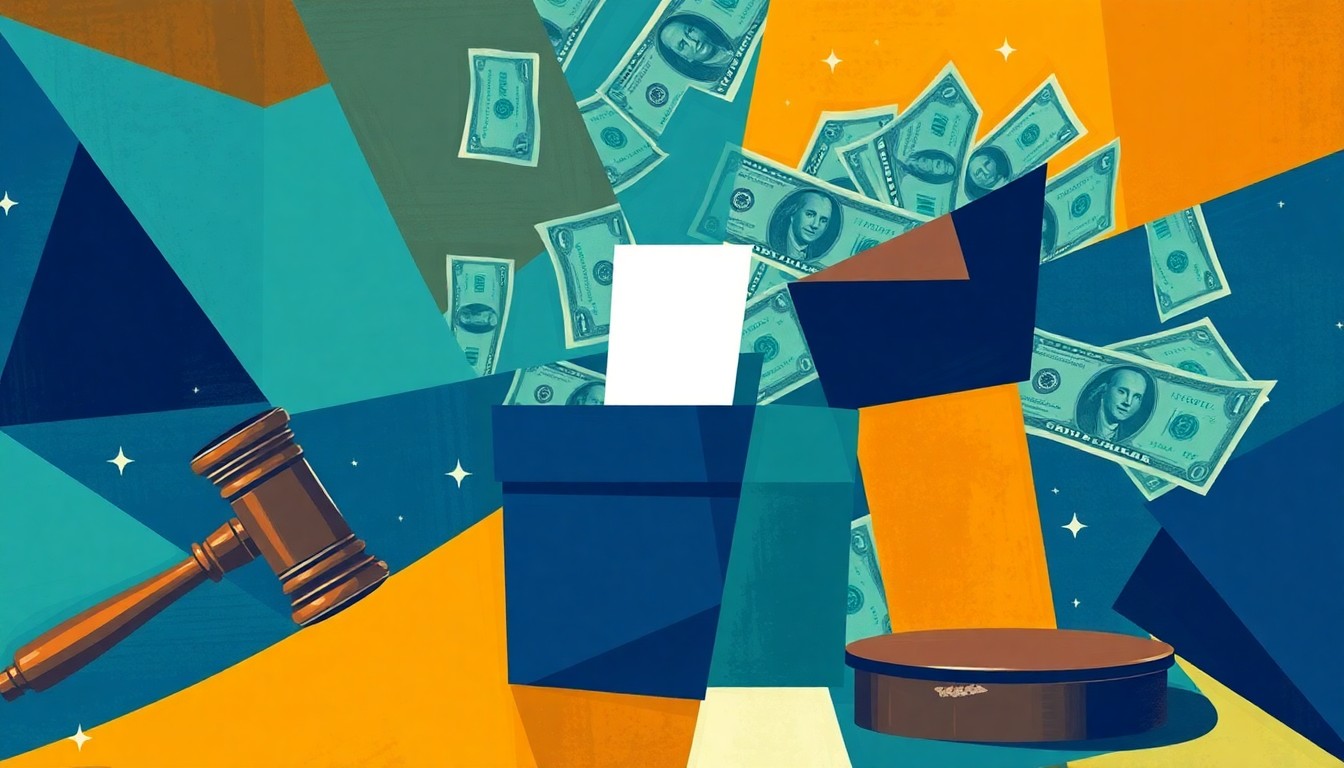 A fractured, avant-garde painting illustrates the growing public concern over the outsized influence of money in the political process.San Diego Today
Voters and elected officials are calling for a constitutional amendment to regulate campaign spending and reduce the outsized influence of money in politics. This comes 50 years after the Supreme Court's Buckley v. Valeo decision equated campaign spending with free speech, and 16 years after Citizens United extended similar rights to corporations and unions, leading to an explosion of campaign spending.
Why it matters
Polling shows broad, bipartisan agreement that money has too much influence in politics, especially in California where outside money plays an outsized role, making elections among the most expensive in the nation. Voters want the rules around campaign spending to be set by themselves and their elected representatives, not the courts.
The details
The author argues that a constitutional amendment is needed to restore the authority of Congress and the states to regulate campaign spending, in order to put 'We the People' back in charge of the political process. They note that the Constitution has been amended before to correct the nation's course, and it's time to do so again to address the growing concern that democracy is being dominated by a small, wealthy few.
- This year marks the 50th anniversary of the Buckley v. Valeo Supreme Court ruling.
- Citizens United was decided 16 years ago.
The players
Rosalind Hirst
A resident of Normal Heights, California who wrote the letter to the editor.
What they’re saying
“Voters and elected officials — not the courts — to set the rules.”
— Rosalind Hirst, Normal Heights Resident
The takeaway
This case highlights the growing bipartisan consensus that money has too much influence in politics, and the desire among voters to have Congress and state legislatures, not the courts, set the rules around campaign spending through a constitutional amendment.
San Diego top stories



San Diego events

Apr. 3, 2026
2026 Aztec Softball Vs. Utah State
Apr. 3, 2026
2026 Aztec Baseball vs. Air Force
Apr. 3, 2026
Ben Quad