- Today
- Holidays
- Birthdays
- Reminders
- Cities
- Atlanta
- Austin
- Baltimore
- Berwyn
- Beverly Hills
- Birmingham
- Boston
- Brooklyn
- Buffalo
- Charlotte
- Chicago
- Cincinnati
- Cleveland
- Columbus
- Dallas
- Denver
- Detroit
- Fort Worth
- Houston
- Indianapolis
- Knoxville
- Las Vegas
- Los Angeles
- Louisville
- Madison
- Memphis
- Miami
- Milwaukee
- Minneapolis
- Nashville
- New Orleans
- New York
- Omaha
- Orlando
- Philadelphia
- Phoenix
- Pittsburgh
- Portland
- Raleigh
- Richmond
- Rutherford
- Sacramento
- Salt Lake City
- San Antonio
- San Diego
- San Francisco
- San Jose
- Seattle
- Tampa
- Tucson
- Washington
Mars' Distant Influence Triggers Earth's Ice Ages
UC Riverside study finds the Red Planet's gravity shapes our planet's climate cycles over millions of years.
Apr. 10, 2026 at 11:09am
Got story updates? Submit your updates here. ›
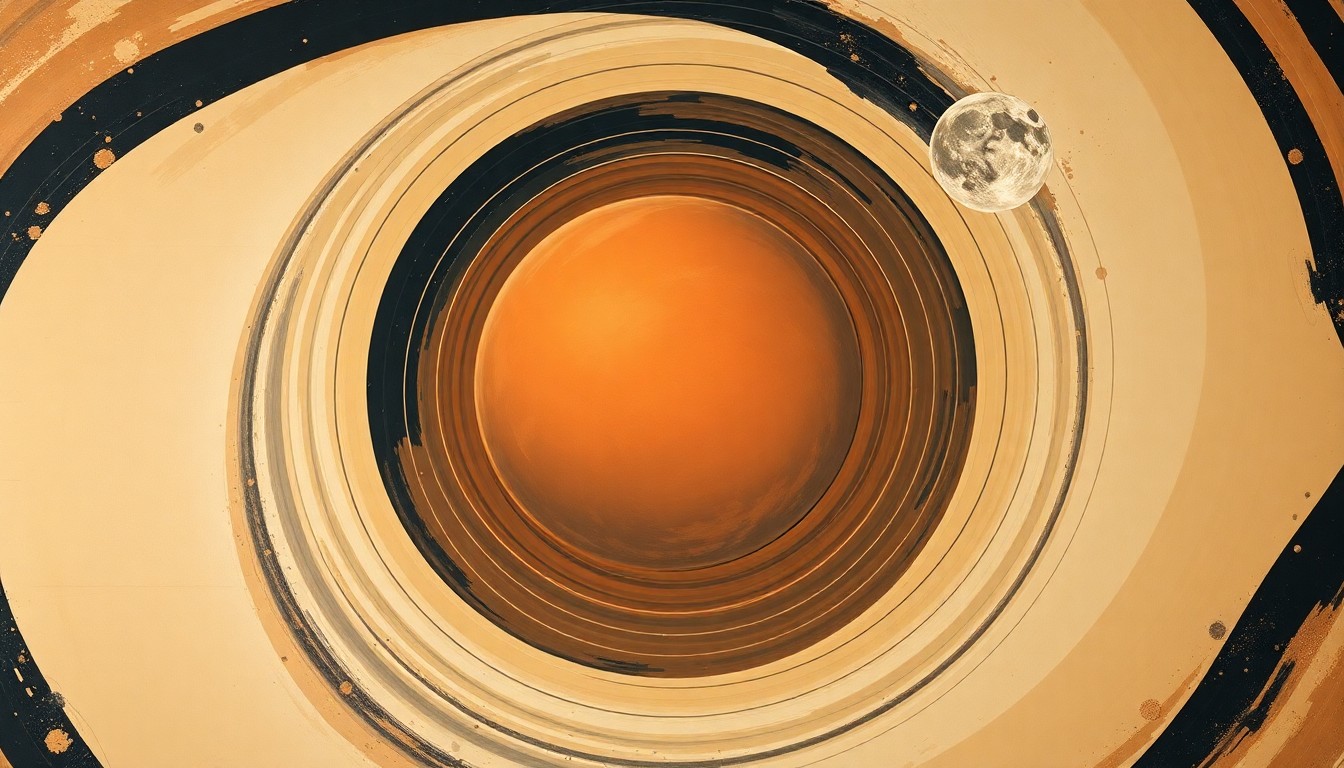 A conceptual illustration depicting the intricate gravitational dance between Earth and Mars, whose celestial interactions shape the climate cycles of our planet.Riverside Today
A new study from the University of California, Riverside has found that the distant planet Mars plays a crucial role in setting the 2.4-million-year rhythm that triggers ice ages on Earth. By manipulating the presence of Mars in solar system simulations, researchers discovered that the Red Planet's gravitational influence is a key driver behind the Milankovitch cycles that govern our planet's long-term climate patterns.
Why it matters
This research challenges our understanding of how planetary interactions can profoundly impact a world's climate, even from 140 million miles away. It suggests that small variations in a planet's mass could have substantial effects on the climate of nearby worlds, adding new layers of complexity to the search for potentially habitable exoplanets.
The details
The study focused on Milankovitch cycles, long-term changes in Earth's orbit and tilt that affect the distribution of sunlight. By removing Mars from the simulations, the researchers found that certain key climate cycles, particularly a 100,000-year pattern, disappeared. This indicates Mars' crucial role in setting these orbital rhythms that drive ice age cycles on Earth. The simulations also showed that increasing Mars' mass led to shorter orbital cycles, demonstrating the Red Planet's gravitational influence.
- The study was conducted by researchers at the University of California, Riverside in 2026.
- The findings were published on April 10, 2026.
The players
University of California, Riverside
A public research university located in Riverside, California that conducted the study on Mars' influence on Earth's climate.
What’s next
Future research will explore the sensitivity of other solar systems and the potential for similar planetary interactions to influence climate on exoplanets.
The takeaway
This study highlights the intricate connections within our solar system, demonstrating how the distant planet Mars can play a crucial role in shaping the long-term climate patterns on Earth through its gravitational influence on our planet's orbital cycles.