- Today
- Holidays
- Birthdays
- Reminders
- Cities
- Atlanta
- Austin
- Baltimore
- Berwyn
- Beverly Hills
- Birmingham
- Boston
- Brooklyn
- Buffalo
- Charlotte
- Chicago
- Cincinnati
- Cleveland
- Columbus
- Dallas
- Denver
- Detroit
- Fort Worth
- Houston
- Indianapolis
- Knoxville
- Las Vegas
- Los Angeles
- Louisville
- Madison
- Memphis
- Miami
- Milwaukee
- Minneapolis
- Nashville
- New Orleans
- New York
- Omaha
- Orlando
- Philadelphia
- Phoenix
- Pittsburgh
- Portland
- Raleigh
- Richmond
- Rutherford
- Sacramento
- Salt Lake City
- San Antonio
- San Diego
- San Francisco
- San Jose
- Seattle
- Tampa
- Tucson
- Washington
HKUST Researchers Unlock Key to Ultrafast Liquid-Liquid Phase Separation
New study reveals how mussels can glue themselves to rocks in under 30 seconds, paving the way for instant biocompatible surgical adhesives.
Apr. 9, 2026 at 11:14am
Got story updates? Submit your updates here. ›
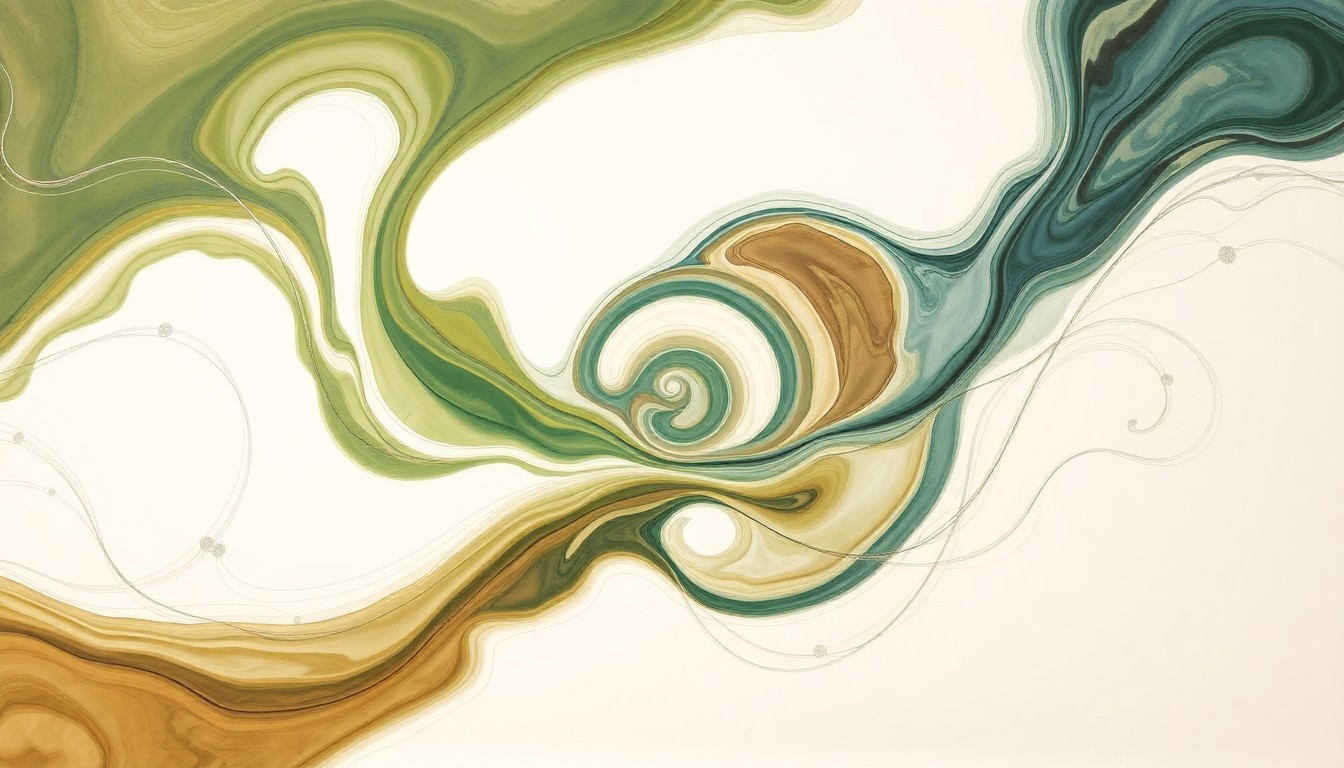 A conceptual visualization of the ultrafast liquid-liquid phase separation process observed in nature, which could enable the development of innovative adhesives and smart materials.Pasadena Today
Researchers at the Hong Kong University of Science and Technology (HKUST) have solved a long-standing puzzle about the rapid self-assembly process of liquid-liquid phase separation (LLPS) observed in nature, such as how mussels can instantly glue themselves to rocks. Using large-scale molecular dynamics simulations, the team discovered that mimicking nature's "Flux Pathway" method, where molecules mix at a target spot, creates an electrochemical "superhighway" that drives assembly at an incredible rate - up to 47 years faster than conventional laboratory techniques. This breakthrough has significant implications for developing instant, biocompatible surgical glues and programmable smart materials.
Why it matters
Liquid-liquid phase separation is a fundamental process in biology, chemistry, and materials science, but the speed at which it occurs in nature has long puzzled researchers. This new study not only solves this mystery but also provides a clear blueprint for replicating nature's ultrafast assembly methods, which could lead to transformative applications in fields like medicine and smart materials.
The details
The HKUST research team, led by Professor Shensheng Chen and his PhD student Wu Zongpei, collaborated with Professor Zhen-Gang Wang from the California Institute of Technology. Using a powerful custom-built simulation platform, the researchers were able to model the entire LLPS process from start to finish, tracking over one million charged particles and explicitly modeling both hydrodynamic and electrostatic forces. They discovered that by mimicking nature's "Flux Pathway", where molecules mix at a target spot, an electrochemical "superhighway" is created that drives assembly at an incredible rate. Under this pathway, the condensed domain in LLPS dynamically grows with time following a power law of t^(2/3), whereas classical theory predicts a scaling of t^(1/3). This difference in scaling means that forming a half-centimeter adhesive droplet takes just 10 seconds using nature's method, compared to over 47 years using conventional laboratory techniques.
- The study was published in Nature Communications in 2026.
- The team's previous foundational work was published in Physical Review Letters in 2023.
The players
Shensheng Chen
Professor in the Department of Chemical and Biological Engineering at the Hong Kong University of Science and Technology (HKUST) and co-corresponding author of the study.
Wu Zongpei
PhD student at HKUST and first author of the study.
Zhen-Gang Wang
Dick and Barbara Dickinson Professor of Chemical Engineering at the California Institute of Technology and collaborator on the study.
What they’re saying
“Nature has been our ultimate inspiration. The disconnect between the slow pace in experimental labs and the ultrafast assembly in marine life was a critical problem we had to solve.”
— Shensheng Chen, Professor, HKUST
“Our earlier work first discovered that there is a fundamental difference between LLPS dynamics of polyelectrolyte systems and classical theories, but this new study provides the practical blueprint. By simulating the entire process at unprecedented length and time scales, we have moved beyond theory to demonstrate how nature achieves such remarkable speed.”
— Shensheng Chen, Professor, HKUST
What’s next
The researchers plan to continue exploring how to apply their findings to develop instant, biocompatible surgical glues and other smart materials that can assemble on demand.
The takeaway
This breakthrough in understanding the ultrafast liquid-liquid phase separation process observed in nature could lead to transformative applications in fields like medicine and materials science, by enabling the development of innovative adhesives, coatings, and programmable smart materials that can assemble rapidly and efficiently.
Pasadena top stories


Pasadena events
Apr. 9, 2026
Death of a Salesman - Local
Apr. 10, 2026
Death of a Salesman - Local
Apr. 11, 2026
Death of a Salesman - Local