- Today
- Holidays
- Birthdays
- Reminders
- Cities
- Atlanta
- Austin
- Baltimore
- Berwyn
- Beverly Hills
- Birmingham
- Boston
- Brooklyn
- Buffalo
- Charlotte
- Chicago
- Cincinnati
- Cleveland
- Columbus
- Dallas
- Denver
- Detroit
- Fort Worth
- Houston
- Indianapolis
- Knoxville
- Las Vegas
- Los Angeles
- Louisville
- Madison
- Memphis
- Miami
- Milwaukee
- Minneapolis
- Nashville
- New Orleans
- New York
- Omaha
- Orlando
- Philadelphia
- Phoenix
- Pittsburgh
- Portland
- Raleigh
- Richmond
- Rutherford
- Sacramento
- Salt Lake City
- San Antonio
- San Diego
- San Francisco
- San Jose
- Seattle
- Tampa
- Tucson
- Washington
Caltech Researchers Discover How Brain Uses Vision Neurons for Mental Imagery
Findings could help develop defenses against memory loss diseases and improve artificial intelligence.
Apr. 10, 2026 at 4:22am
Got story updates? Submit your updates here. ›
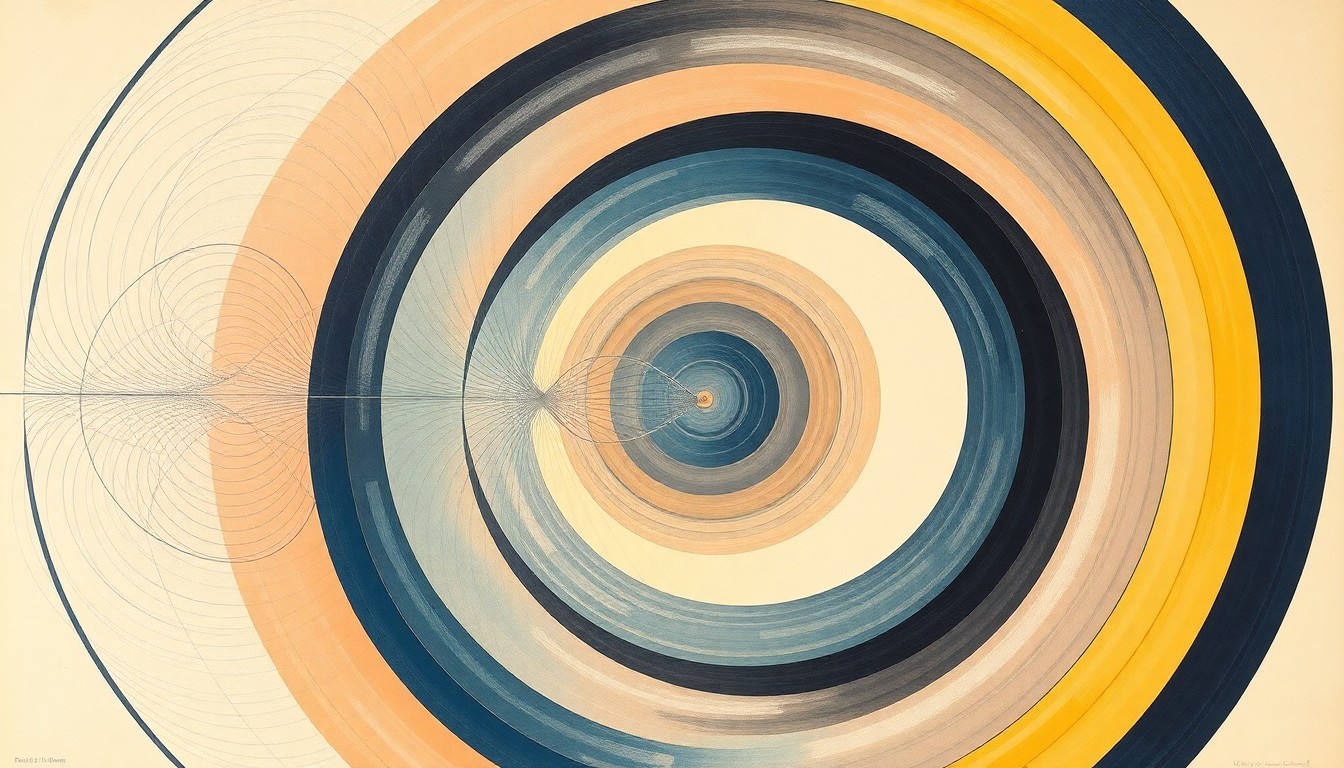 An abstract neural network diagram illustrates the shared neural pathways underlying both visual perception and mental imagery, unlocking new insights into the brain's creative and cognitive capabilities.Berkeley Today
Researchers from Caltech and Cedars-Sinai have found that many of the same neurons that are active when looking at an object are also active when imagining that object from memory. The findings could help develop defenses against diseases that cause memory loss, like Alzheimer's, and assist in building more efficient artificial intelligence platforms.
Why it matters
The new study builds on previous work by Caltech professor Doris Tsao, who has made discoveries about how the brain represents visual objects. Understanding the mechanisms behind mental imagery could provide insights into a wide range of human behaviors, from creative endeavors to problem-solving, and lead to advancements in both medicine and technology.
The details
The researchers, including former Caltech graduate student Varun Wadia and Cedars-Sinai faculty member Ueli Rutishauser, recorded neuron activity in patients with epilepsy who have electrodes temporarily implanted in their brains. This allowed them to examine what neurons in the ventral temporal cortex, a region critical to visual recognition and memory, were doing when study participants looked at and imagined various objects. They found that roughly 40% of the neurons reactivated during the imagining phase and had similar responses as during vision, suggesting the brain uses the same distributed axis code to represent both viewed and imagined objects.
- The study's findings were published on April 9, 2026, in the journal Science.
- Varun Wadia conducted the research as part of his PhD thesis work at Caltech.
The players
Varun Wadia
A former graduate student in neurobiology at Caltech and now a postdoctoral scholar at Cedars-Sinai, who is the first author of the study.
Doris Tsao
A professor in neurobiology at UC Berkeley who was a Caltech faculty member from 2009 to 2021 and is a senior author of the paper. Her previous research on how the brain represents visual objects laid the groundwork for this study.
Ueli Rutishauser
An electrophysiologist and neuroscientist who is a faculty associate in biology and biological engineering at Caltech and a faculty member at Cedars-Sinai, where he directs the Center for Neural Science and Medicine. He is a senior author on the study.
Chrystal Reed
A neurologist at Cedars-Sinai and a co-author on the study.
Ralph Adolphs
The Bren Professor of Psychology, Neuroscience, and Biology at Caltech, who provided support for this study.
What they’re saying
“We were very interested in trying to understand the mechanisms of mental imagery because they permeate many interesting human behaviors.”
— Varun Wadia, PhD '23, former graduate student in neurobiology at Caltech, first author of the study
“It was very surprising how well the model for nonhuman primates mapped to and worked for humans. It means this entire body of knowledge that has been developed over many years applies to the human brain, which is far from trivial.”
— Ueli Rutishauser, Faculty associate in biology and biological engineering at Caltech, faculty member at Cedars-Sinai, senior author of the study
“If you really understand how memory works, then you can start to think about how we might consolidate memory or prevent it from being eroded by Alzheimer's and other diseases. Tomorrow's clinical care is today's science project, and we are immensely grateful for the patients who were willing to participate in our work and understand that their participation could lead to benefits for others in the future.”
— Varun Wadia, PhD '23, former graduate student in neurobiology at Caltech, first author of the study
What’s next
The team is planning follow-up studies with additional data collected from their study participants to try and find where the trigger signal for reactivation is coming from and how different areas of the brain might be working together to implement imagination.
The takeaway
This study provides a significant step forward in understanding the neural mechanisms behind mental imagery, which could have far-reaching implications for fields ranging from artificial intelligence to the treatment of memory-related diseases. By decoding how the brain represents and recalls visual information, researchers may be able to develop new strategies for enhancing cognitive abilities and addressing neurological disorders.